![[ CYBER_ESCAPEMENT ]](https://cyberescapement.com/wp-content/uploads/2026/04/cyber-escapement-long-logo-v5-1.jpg)
[ FIELD_LOG: 003 ]
This series tells the true stories behind the archive — acquisitions, near-misses, methodology decisions, and the role of AI throughout. Each post is a chapter in a collecting philosophy that is systematic, AI-native, investment-disciplined, and honest about all three.
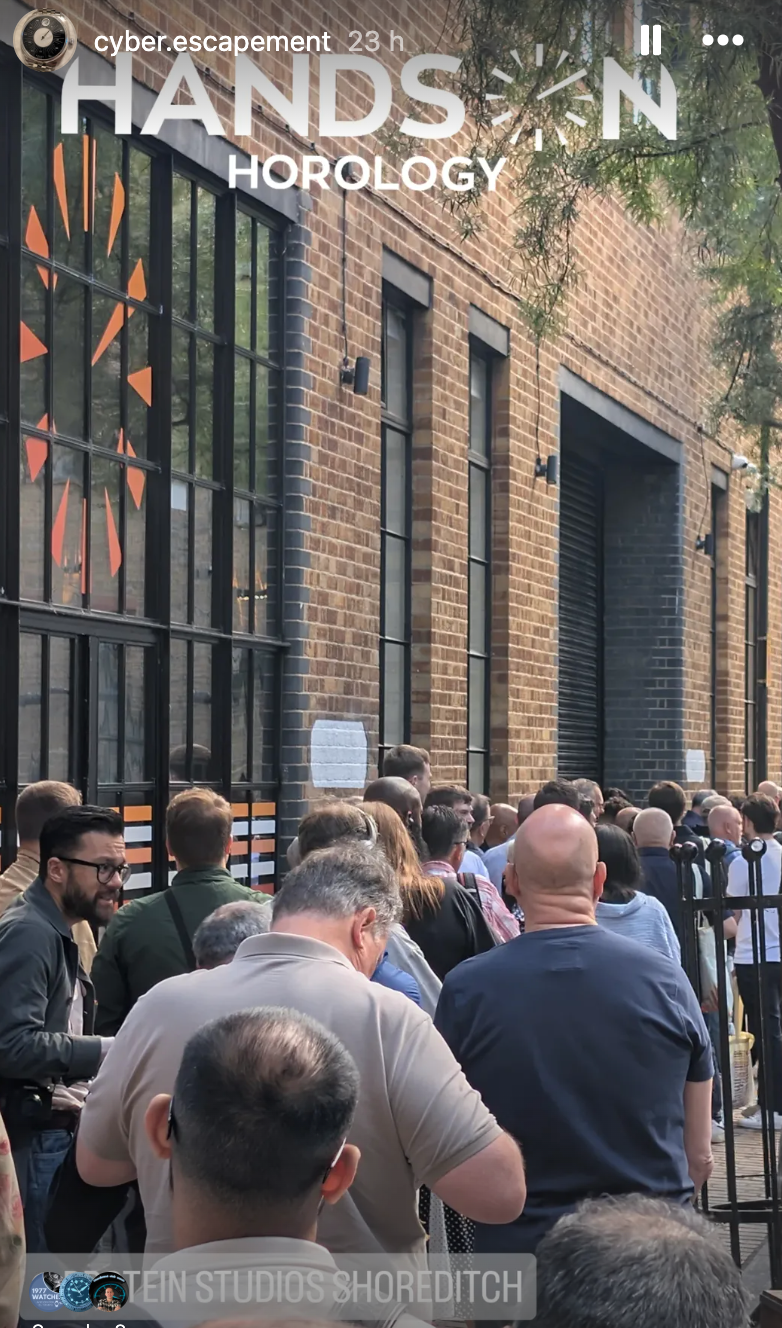
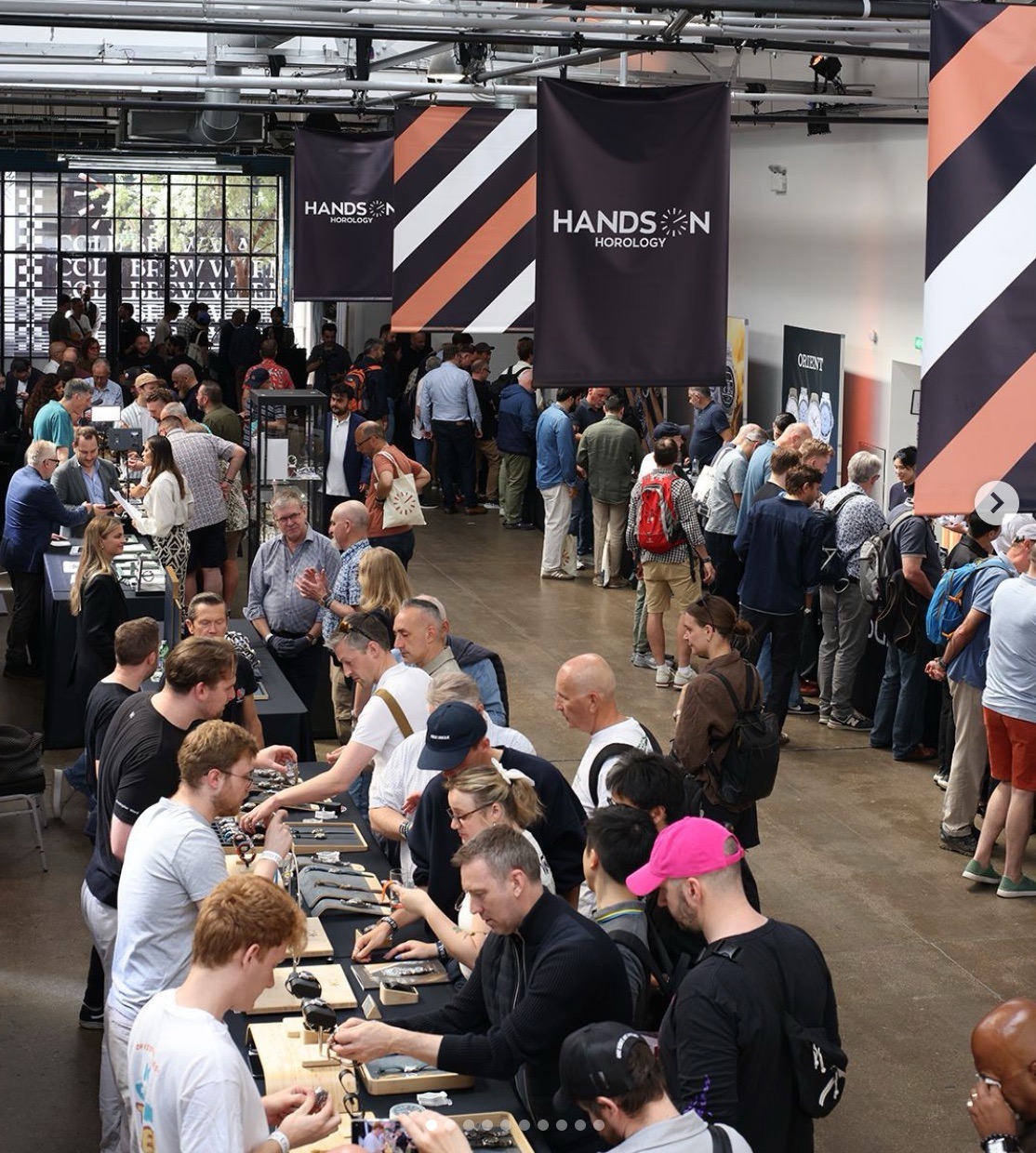 London. Friday, 13th June 2026. Protein Studios, Shoreditch. A former industrial building off Hanbury Street, two minutes from Brick Lane. Outside, in actual English sunshine — the kind that makes the news — a queue. At least one of those things is completely normal here.
Ninety, maybe one hundred people. The kind who can identify a watch by its caseback from three metres. The density of knowledge per square metre on this pavement is unusual.
The Ianos Dytis is on my wrist. The primary objective for today is specific: secure a low-number SB10 Union Jack from Sartory-Billard. The watch was announced for this event — a Union Jack guilloché edition, created for the occasion, for a London show. Five units. I have been working toward this for weeks. Direct correspondence with the founder. A framework verdict already rendered. I want a low number and I want to be early.
The door opens.
One of Five
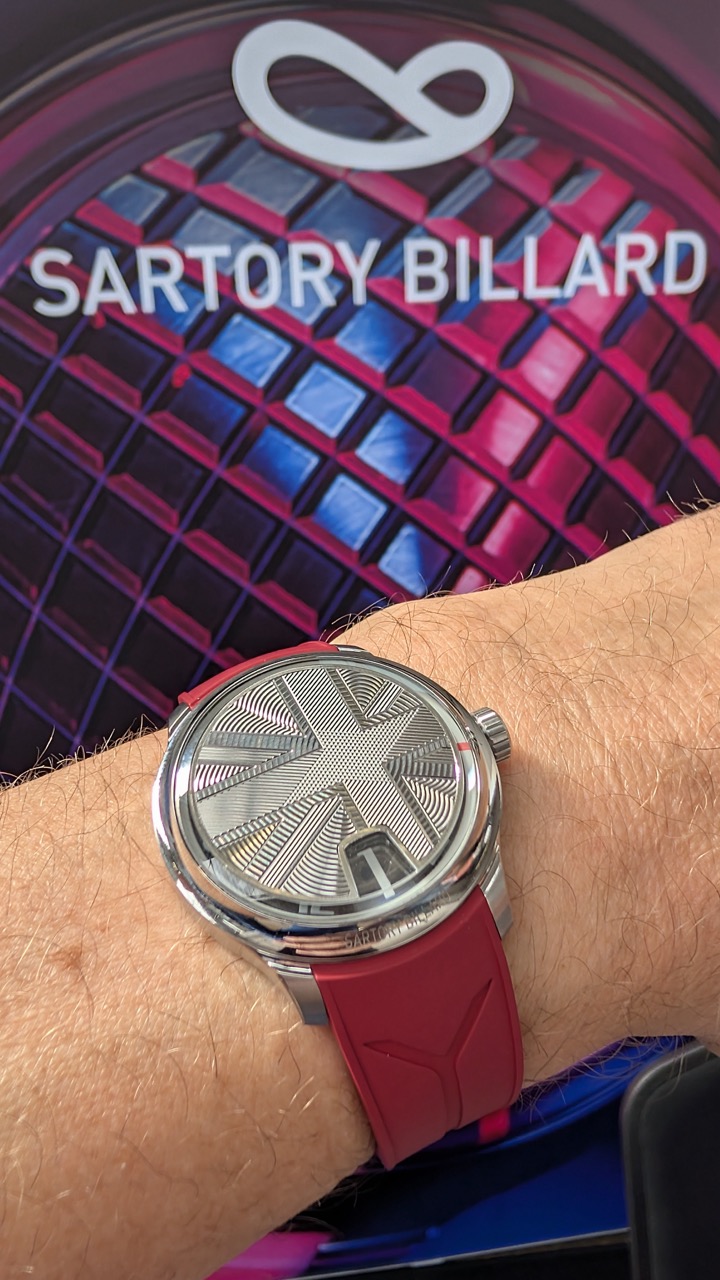
The Sartory-Billard stand has a prototype of the Union Jack on the table. Not the production piece — a prototype, handled, examined, tried on. Which is the correct way to make a decision about a watch.
The guilloché runs across the Union Jack geometry in distinct patterns for each segment — not a single texture applied to a flag outline, but a considered execution that treats each field of the flag as its own object. The jumping hour sits at six o’clock. The complication suits the architecture of the dial. It wears better than I expected, which is the best outcome when you have been living with a decision on paper for weeks.
I ask about numbering. Individual serials, confirmed on the caseback. I ask which numbers are available. At this point in the morning, all of them.
I take number one.
They send a private link by email to secure the order. I do not follow through immediately. I put the link in my pocket, metaphorically, and go to work on the floor.
The Floor
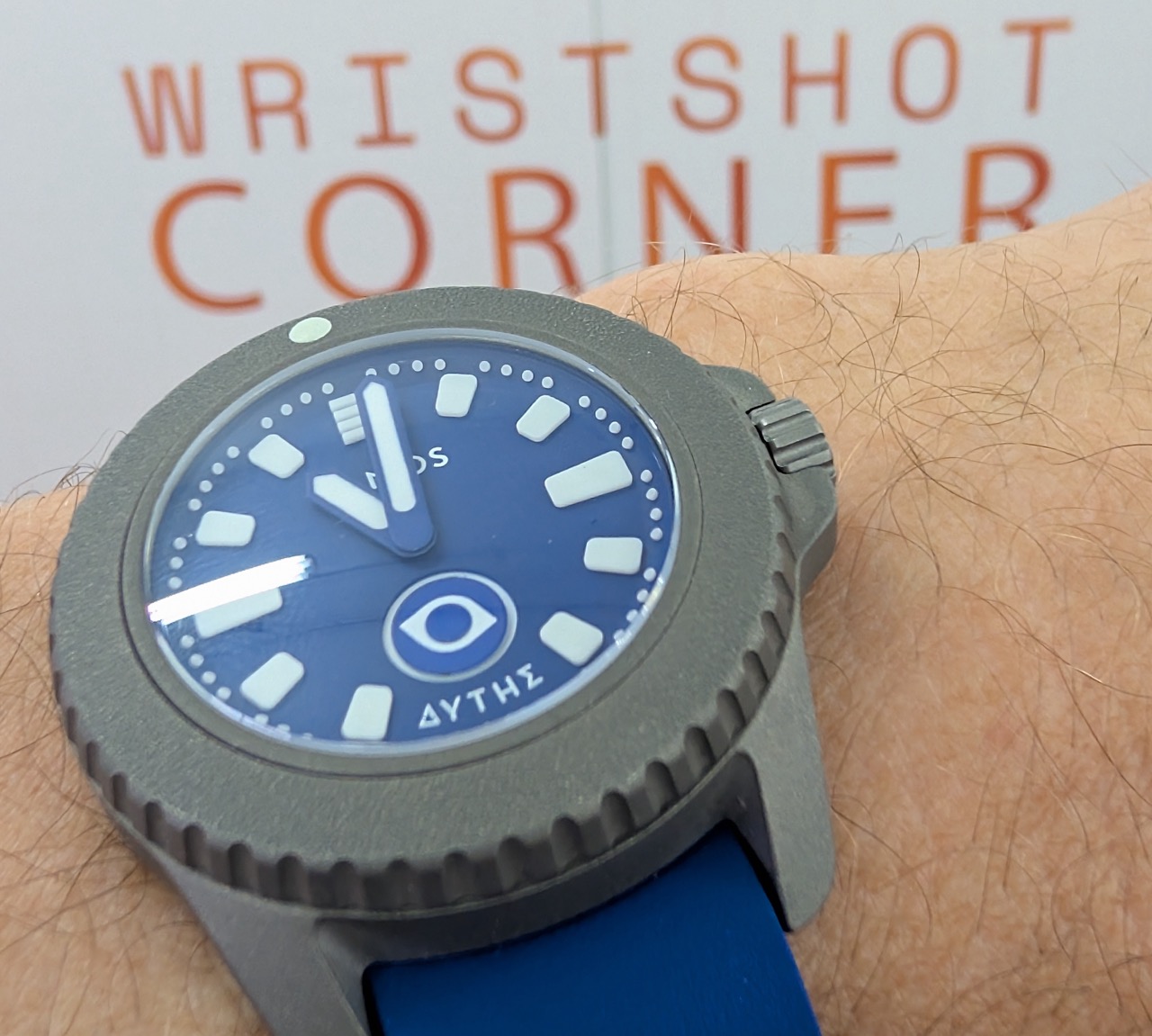 The Ianos comes with me everywhere I go today, and it begins doing what the Ianos does.
At the first stand, the person behind the table clocks it before I have said a word. Not a comment — a recognition. The slight recalibration of attention that happens when someone sees something they were not expecting to see on a stranger’s wrist. By the third stand the pattern is established. At several points across the morning, when I take the Ianos off to try something on, whoever I am talking to asks to hold it. Not to be polite. Because they want to.
There is something to be learned from this. The watches that command rooms are not always the ones the market currently prices highest.
At the Micromilspec stand, I confirm my order on the Milgraph T5 Chrome. A brief conversation produces a small but meaningful outcome — my allocated serial shifts from sixteen to nine. Thirty-five pieces in the run. Nine sits well.
At the Isotope stand, I find José Miranda, co-founder. We talk about the two watches I have on order — the Moonshot Thunderclap and the OVNI Jumping Hour Founders Edition. He tells me the OVNI is shipping next week. I raise the question of serial numbering and he agrees to look into it.
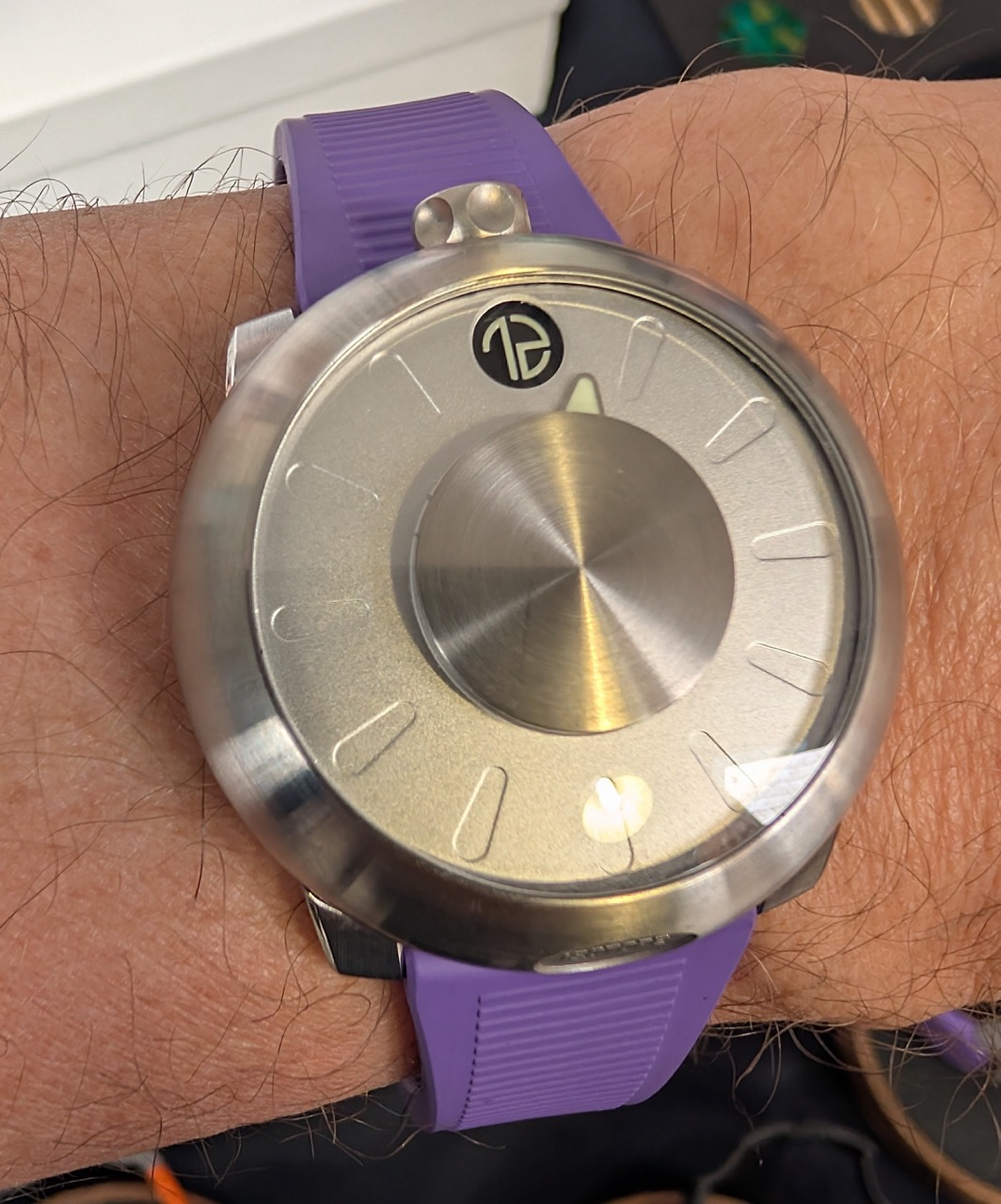
He also tells me the story of how the OVNI nearly failed before it shipped.
The jumping hour disc — the rotating aluminium component at the heart of the complication — was causing problems. The first batch came back with faults. Discs were sticking. Not rotating. The culprit turned out to be heat: sun warping the aluminium fractionally against its housing. They had tested many materials before settling on aluminium — ceramic, titanium, plastic — balancing the need for structural integrity against the energy available from the movement to drive the rotation. Aluminium won. But untreated aluminium, it turned out, was not enough.
The solution was to reheat each disc to high temperature and then quench it in an oil bath — a heat treatment process that locks the material’s structure into a stable state and eliminates the warping problem permanently. The discs were remanufactured. The watches held.
I try a prototype Thunderclap on the wrist, then the OVNI. There is a specific quality to wearing a watch you have committed to before it exists in finished form — a test of whether the object is going to be what you believed it would be. Both pass.
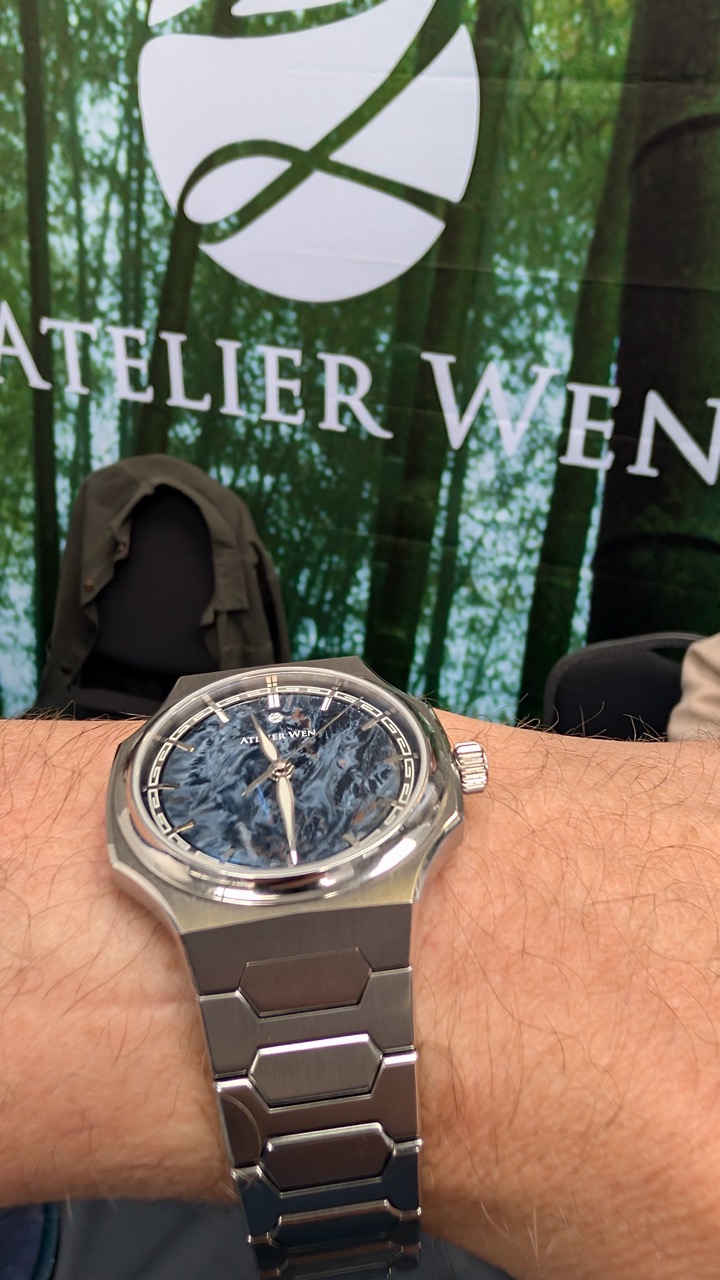 At the Atelier Wen stand, I meet Robin Tallendier. We talk about the Perception Xuán — my order, the dispatch delay, the pietersite. He confirms what a recent brand email had described: the stone is exceptionally brittle. The twelve precise cutouts required for the sunmao dial structure produced a high failure rate at each stage of production. Dials that did not meet standard were set aside rather than shipped.
I ask about my position in the run. Confirmed: I am part of the first 225, which are individually and sequentially numbered on the caseback — 001, 002, 003 of 225 — and marked with an engraved Millésime seal in black lacquer. There is a second batch to follow; Robin confirms the total for this Millésime will be slightly above the prior year’s 498, putting the full run in the very low five hundreds. My piece will carry the number. The seal. The proof of sequence.
Robin then shows me two Tantalum case watches from the range. I put one on. The weight is immediate and total — a density that reads as genuinely unusual after a morning wearing the Ianos in titanium. Robin tells me he loves a heavy watch. I do not share this preference, but I understand it. Some people want a watch to remind them it is there.
The Xuán prototype goes on next. The pietersite does on the wrist what pietersite does — it moves. The chatoyance shifts with the light angle in a way that photographs never quite capture. The 225 that survived the production process are the ones that deserved to.
Elsewhere on the floor, I fall into a conversation with someone at the Christopher Ward stand about the Pan Am GMT. I mention I own one. He introduces me to Will Brackfield, the designer. I show him a photograph of his watch on my wrist, via my phone. He looks at it for a moment. We shake hands. They tell me they regret limiting the run to 707 pieces — thematically necessary, given the aircraft, but the demand exceeded what the number allowed for. A good problem to have had.
At the Kollokium stand, I mention that I received my Projekt 02 Variant B a few days ago. The response is immediate confusion — they dispatched six weeks ago. I explain: vacation hold, DHL, an extended period out of the country. The confusion resolves into laughter. The watch has spent the majority of its existence in a facility, waiting for me to come home.
I check back at the Sartory-Billard stand. No further units have moved. I note the time and continue.
The 89th of 88
Earlier in the year, before this show, before the primary mission was set, I had looked at the AWAKE Deadly Watch. Son Mài lacquer, yellow dial, Kill Bill Crazy 88 reference — 88 units, because the concept demands exactly that number. I liked it. It stuck in my head. But it had sold out months before I got to it, and I had moved on.
Which is why I do a double take when I see it on the AWAKE table.
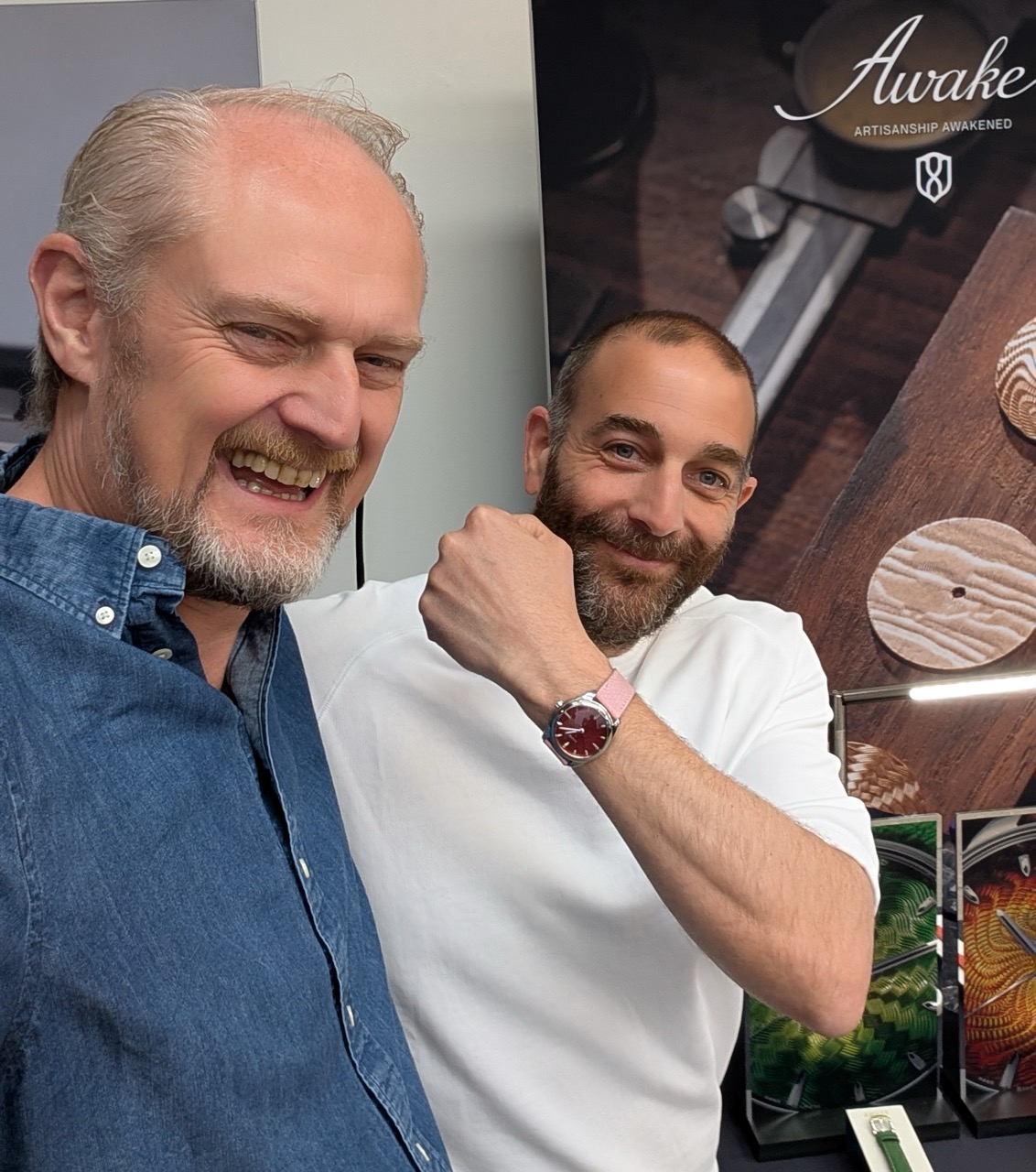 I ask Thibaut Sacré, co-founder and Director of Operations — twenty years in the watch industry, across major groups and independent brands — whether I am seeing correctly. Confirmed sold out months ago, he says. I ask why it is on the table. He explains: it is his personal piece. Unit zero. The one he kept. And then: he is selling it today.
I ask why.
He has plenty of watches, he says. And something that has generated this kind of response — he has had a great deal of positive feedback on this piece — should be in the hands of a collector. Not sitting in a drawer.
I believe him.
I step away. I open my laptop and run the numbers properly — because a decision like this deserves more than instinct, and the archive exists precisely so that instinct is never the only input. The framework scores it a few points below the threshold. I look at what is driving the miss and I look at what the miss does not capture. The unit in front of me is #00 of 88. It is not the first watch in the edition. It is the watch that confirmed the edition was worth making.
I go back to the table. I buy it.
We take a photograph. Later, after the show, I post it to Instagram. AWAKE reposts it. The brand has endorsed the provenance record on the day it happened.
The 89th of 88 is in the archive now. It should not exist. It does.
Released
The morning session closes at half past one.
Before I leave, I go back to the Sartory-Billard stand for the last time. I ask how many have sold.
One. Mine. The private link is still in my email, unclaimed.
In a room of several hundred watch collectors — curated, concentrated, exactly the audience a five-unit independent guilloché edition should appeal to, at the moment of its London launch — the demand was one person.
I think about the weeks of analysis. The framework verdict. The prototype on my wrist. The number one allocated. All of that was done correctly. The watch is a genuine object — the guilloché is serious, the jumping hour is well-placed, the execution is honest. The score was not wrong about what the watch is.
But I also think about the brand’s stand. The imagery. The language. Bespoke is not an option at Sartory-Billard, it is the foundation on which the brand was built. Every conversation a dialogue rather than a configuration. Each piece an authorship shared between client and creator. That is a genuine and admirable philosophy. It is also a philosophy that fragments a collector base. When every buyer owns something no one else can own, there is no shared reference point, no object around which a community coheres. A named edition exit thesis depends on exactly that community existing at the point of sale.
The market had been in the room all morning. It had not acted.
I send a message the following morning to confirm I am releasing the number.
The framework worked. Not at a desk, but on the floor, in real time, over the course of a morning. That is what it is for.
I had been invited to the AWAKE party that evening — they were hosting at Time+Tide in London. I did not go.
I had the watch. That was enough.
